
25 years at Mirus: Michael Greif has played a key role in shaping HR software development in the Swiss hotel and catering industry. A conversation about practical relevance, legal certainty, new technologies, and the question of where the industry is headed.
Mr. Greif, 25 years at one and the same company – that is a true rarity in today’s working world. What has kept you at Mirus Software AG?
Michael Greif: To be honest, I’ve never really asked myself that question – and that perhaps says it all. When you know every morning what you are working for, you don’t look at the years. I joined Mirus because the task appealed to me: software that truly makes something easier in people’s everyday lives – a tool that gives the head chef or the restaurant manager the freedom to focus on their work. Added to that is a corporate culture where you can take on responsibility. 25 years sounds like a long time – to me, it feels like a journey that is far from over.
How did your journey at Mirus begin – and what led you into the world of payroll, HR, and labor law in the hotel industry back then?
Starting out wasn’t a grand plan, but rather a happy coincidence with consequences. I had worked in the industry myself for 15 years and knew: this industry operates according to its own rules. Shift work, night shift premiums, seasonal work, L-GAV – this is a world that simply cannot be mapped with standard solutions. It was precisely this complexity that gripped me. At Mirus, I had the opportunity to bring this knowledge directly into product development and customer support.
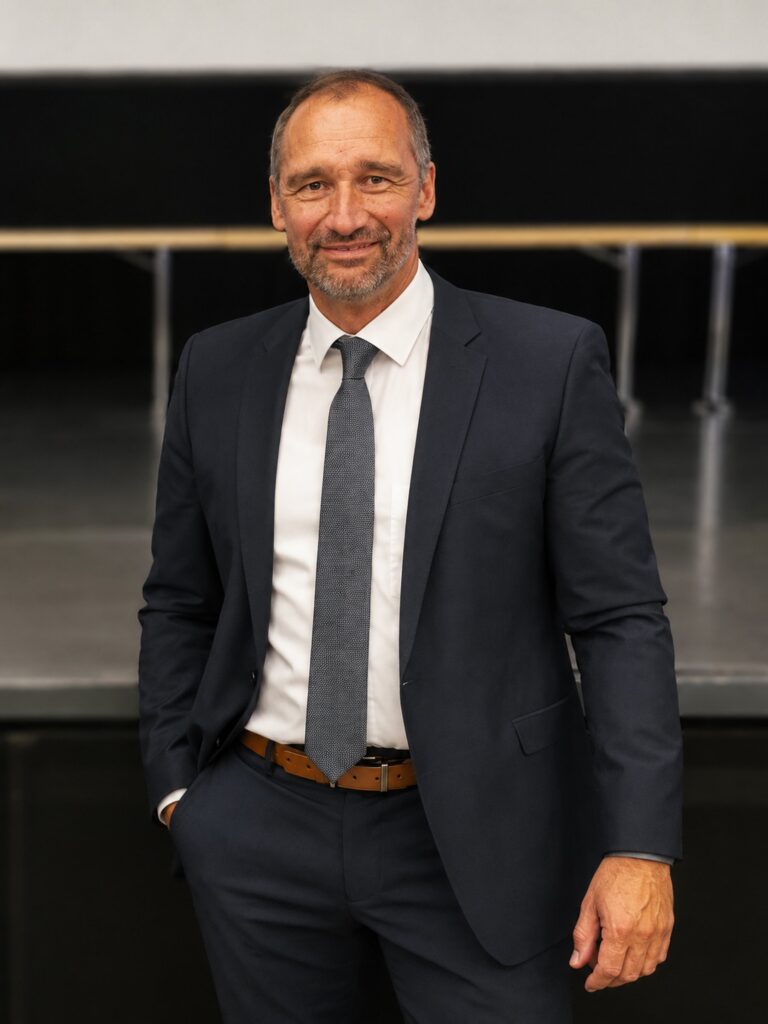
(c) Michael Greif, Head of Customer Support, Mirus Software AG
What distinguishes your view of the industry from someone who develops HR software ‘from the outside’?
The difference is fundamental. Anyone who has never experienced what it means to correctly finalize a payroll for 80 employees on the 28th of the month – including joiners and leavers, sick leave, employees subject to withholding tax, and various employment conditions – cannot build software that truly holds up in that moment. I am talking about the reality in an industry that runs 24 hours a day, where changes to the L-GAV have immediate operational consequences and an error in the withholding tax accounting lands on the managing director’s desk the next morning. This proximity to practice shapes how we think and what we build.
25 years is an eternity in the HR world. How has HR work in the hotel and catering industry changed during this time?
Fundamentally. When I started, HR was still largely paper administration. That has shifted completely. Today, businesses expect HR to make an active contribution to corporate management: real-time evaluations, duty roster optimization, cost transparency per department, and automated accounting taking into account L-GAV and withholding tax. Today’s HR manager is no longer an administrator – they are a decision-maker who needs figures they can rely on.
The L-GAV is considered one of the most complex sets of regulations in Swiss labor law. Why is it such a challenge for businesses?
Because it is not a static document, but a living set of rules. The L-GAV does not just regulate minimum wages – it defines working time models, overtime regulations, night shift premiums, holiday entitlements, termination calculations, and much more. In an industry that runs around the clock, with high turnover and seasonal fluctuations, every revision means: implement it in the system immediately, otherwise you are simply calculating incorrectly. That is exactly a core area of Mirus: we translate this set of rules into logic that works – automatically, audit-proof, and industry-compliant.
The hotel and catering industry has been under enormous pressure for years – skills shortages, cost increases, regulatory requirements. What do you observe when you look at the businesses?
What I see is an industry in transition. The shortage of skilled labor is forcing businesses to rethink. At the same time, employee expectations are rising: transparency, flexible models, clear structures – a real competitive factor in employee recruitment. And margins are thin. No business can afford to be imprecise in its use of resources. I am observing a growing willingness to invest in professional solutions – out of sheer necessity.
Data and AI – two terms that appear everywhere. What do they mean specifically for businesses in the hotel and catering industry?
In our industry, these are not buzzwords – they are operational reality. The only question is whether you use data actively or continue to rely on gut feeling. Anyone who staffs a Friday evening today without knowing the sales forecast and historical comparative values risks having too many staff – or too few. Both cost money. This is exactly where Mirus Prognolite comes in: AI-supported sales, guest, and staff forecasts – for the next shift. Internally, this drives us: Mirus is currently modernizing the entire platform – functionally, technically, and visually.
Forecasts and AI sound convincing. But how does this data actually reach the business – for example, in duty scheduling? Surely anyone who maps their planning digitally today has actually solved the problem – haven’t they?
Not really. Duty scheduling as a function – there are good solutions on the market. But duty scheduling in a vacuum only gets you halfway there. What use is a perfect duty roster if it doesn’t know what the sales forecast says and what costs this roster represents? If the payroll system cannot take over the data? If the employee cannot see their shift in the app? The real challenge lies in the integration – between planning, forecasting, payroll, and communication. That is exactly the approach we consistently pursue at Mirus – not as individual modules, but as a platform.
The requirements profile for HR managers is changing fundamentally. Does communication also play a new role in this?
The HR role has become significantly broader. Anyone working in HR at a hotel today acts as an interface: between management and the team, between legal requirements and actual practice, between data and operational decisions. At the same time, communication is becoming a decisive factor. In businesses with shift work and high turnover, it is often the first thing to fall apart—because there is no reliable platform for it. With Mirus NEO, we have addressed exactly that: duty rosters, documents, internal updates—everything in one place, without any media disruption.
You don’t just experience all of this strategically—as Head of Customer Support, you are close to the businesses that deal with these challenges every day. What are you hearing from them?
I feel much of it daily in direct customer contact. Businesses often don’t have a single problem—they have several that are interconnected. A head chef complains about duty scheduling—but the real problem is a missing forecast. An HR manager struggles with payroll—the cause is three systems that have to be merged manually. The core of good customer support is not solving the stated problem, but the right one. After 25 years, I know: trust is built when the customer realizes that their partner is thinking ahead with them.
Mirus has been a fixture in the Swiss hotel and catering industry for decades. How has the company changed during this time—and where is the journey heading?
We have grown—both in depth and breadth. When I started, Mirus was essentially a payroll solution. Today, it is a platform that combines payroll, time management, duty scheduling, AI-supported forecasting, and employee communication. And we are in the middle of an ambitious development step: Mirus NEO redesign, HR dashboard, digital preboarding, and in the long term, even a voice assistant. The current roadmap can be found at next.mirus.ch. We aren’t developing past the market; we are developing out of three decades of established industry expertise. That is a difference you can feel.
Mr. Greif, 25 years at Mirus—what does this anniversary mean to you personally?
It’s not an occasion to look back—rather a moment to take a breath and keep going. In these 25 years, I have seen an industry that was skeptical of digital solutions for a long time become one that now specifically asks for innovation. And I have witnessed how Mirus has not only accompanied this change but helped shape it. When I see today how naturally our solutions are integrated into daily operations—that is the real validation. Not the years. But that the work counts. For me, this anniversary is also a moment of sincere thanks: to our management for their long-standing trust, to my team and all Mirus employees for their tireless support—here, values are lived, not just formulated. And to our customers, with many of whom far more than a mere business relationship has developed.
Published on: htr.ch